by Yunyu Ong, Rhett D. Loban, and Rauno K. Parrila
First published January 2022
Download full article PDF here.
Abstract
The article explores the design process of a Beat Saber mod called Good Bag. In the Good Bag mod level, players perform saber-sword Wushu martial art moves to the rhythm of contemporary Wuxia-influenced (Chinese martial arts fantasy) music. The vocals version of the mod is also commentary on contemporary racism as well as on historical race-relations. The Good Bag project drew upon two expert cultural practitioners, a martial arts Grandmaster and a musician, from the Chinese diaspora community to strongly shape the mod design and output. The article also discusses the limitations of modding martial arts into Beat Saber. The article outlines the project team’s planned approach to further improve the mod via a dual expert and player design approach using both expert opinion and player feedback. In the next stages of the project, the mod project teams plan to access how effective the mod has been in teaching martial arts, as well as how this might influence attitudes in historical and contemporary race relations.
Introduction
Video games, like other mediums, are developed within cultural contexts and therefore are often culturally-bound (Apperley, 2018; Ford, 2016; Loban & Apperley, 2019). By design, players must play within the algorithmic and cultural confines of a game’s digital framework (Scacchi, 2010). However, game modifications (mods) created by gamers can sometimes fundamentally redefine a game’s content and gameplay. Modding, as defined by Scacchi (2010, p. 2), means customising, tailoring, and remixing gaming objects, such as gaming content, software or even hardware, with mods being the output of this process. This paper reports the creation and design process of a culturally-centred mod called Good Bag for the virtual reality (VR) dance game Beat Saber (Beat Games, 2018) (Figure 1). Good Bag combines contemporary Wuxia-influenced (Chinese martial arts fantasy) music and Wushu martial arts techniques inside a digital space to create a highly immersive and interactive cultural martial arts dance experience.
Figure 1: Example of Beat Saber gameplay from a previous mod.
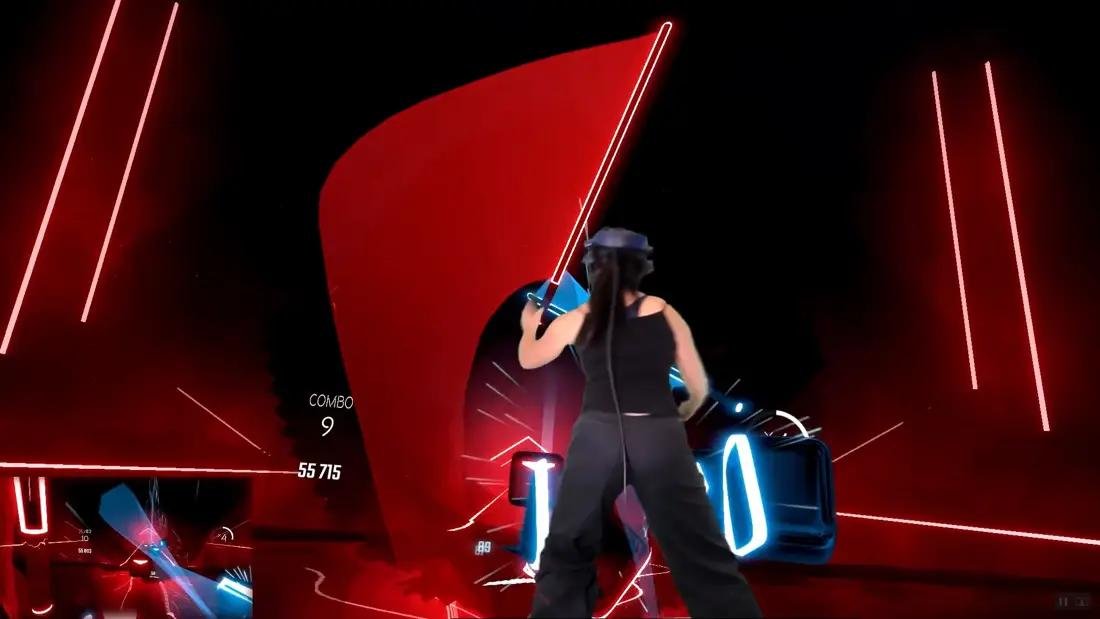
Briefly, Beat Saber can be described as a VR game where boxes and barriers fly towards the player. The player, using their sabers, must hit the flying boxes and avoid the flying barriers by turning their body. The correct directional hitting of these boxes is synchronized with a beat and piece of music playing in the background. The synchronized music and player movement forms an important part of the gameplay experience. By engaging with these game elements, in addition to music in the background, the player typically dances to the music and builds up synchronic and rhythmic interactions between their body and the gameplay. We leveraged this VR gaming experience and modded Beat Saber to embody Chinese martial arts moves in the gameplay in order to create a martial arts dance experience. Further, we took a practitioner-centered approach for developing the mod where input from an expert martial arts practitioner shaped the mod’s design and output (Salen et al., 2004, p. 1). We chose to mod Beat Saber because as the dance-based and highly physical gameplay had the potential to capture and facilitate martial arts movements and interactions in a digital space. Indeed, the research goal of this article is to understand the challenges of modding Chinese martial arts into a virtual reality gaming environment. This article also sets the foundation for planned future stages of the project that includes a paper that examining the effectiveness of the mod to aid teaching martial arts and another paper examining if the mod might affect attitudes towards racism. The intended audience of the mod will be those interested in martial arts and Chinese culture and individuals who want to engage in digital spaces. However, this paper primarily examines the artist-researcher’s mod creation and design process of modding Chinese martial arts into Beat Saber. The initial phase of this practice-led research produced several outputs, including a playable mod, videos of original choreography, thought process diaries, and this research paper. Before describing the creation and design process, we will briefly review relevant literature relating to game-based learning, virtual reality martial arts, and culturally inspired modding.
Literature Review
Game-Based Learning
Game-Based learning (GBL) theories can help explain how knowledge transference occurs between players and digital mediums. Bogost’s (2007) theory of procedural rhetoric explains that players can learn through interactive processes as opposed to written or verbal rhetoric. In short, after a player has engaged with a process, the player will have learnt new ideas and information through the process of interaction. The most apparent form of procedural rhetoric is during the use of computer software, especially video games, which train a player through their algorithmic inputs and outputs. Through this back-and-forth process of player inputs and game outputs, knowledge transfer to the player can occur. Gee (2008a, 2008b) also provides a useful understanding of knowledge transference; games are merely problems that the player needs to solve in a specific context (e.g., inside the game world). Gee (2008b) argues that games allow the player to learn a specific skillset through taking on the persona of another actor in-game, a concept described as the projective stance. The projective stance is simulated by considering a particular time and place, and perceiving how it can be enhanced by particular actions (Gee, 2008b, pp. 260–261). The player can execute such actions by embodying the role of an actor within the context, learning the actor’s required skillsets, and realizing their intentions and objectives. The projective stance can be applied to any gaming medium including that of virtual reality, and it can embody almost any role, including the martial artist. A critical research question in terms of both procedural rhetoric and projective stance is: what knowledge, skills, and attitudes can be effectively learned with these methods?
Virtual Reality Martial Arts
Early forms of VR martial arts research involved the development of motion tracking and movement conversion into 2D screen and gameplay, such as the martial arts game installation Kick Ass Kung-Fu (Hämäläinen et al., 2005). In the game players fight virtual enemies with kicks and punches. The game had input from and was tested by 46 martial arts practitioners. This kind of player-centered approach is a good way to engage the players in the community to playtest the game and adjust it in accordance with feedback (Salen et al., 2004; Sykes & Federoff, 2006)
Earlier motion capture technology was also used to teach Tai Chi to cancer patients, benefitting them by encouraging relaxation and positive thinking (Becker & Pentland, 1996). Moreover, there has been successful research tracking Wing Tsun moves that were then converted into a digital form (Heinz et al., 2006). Additionally, motion capture has been used to catalogue Thai self-defense and boxing moves that were subsequently converted to 3D animation to help teach Education students about Thai culture, exercise postures, physical activities, and self-defense techniques (Phunsa, Potisarn, & Tirakoat, 2009).
Similarly, more recent VR projects have assessed the suitability of the Kinect motion capture hardware for teaching martial arts via capturing user punches and blocks and found it to be useful (Chye & Nakajima, 2012). Another research paper also explored the use of a martial arts program using the Kinect to teach six university students martial arts where real objects, such as punching gloves, were integrated into the activity to provide greater immersion in the VR simulation (Chye, Sakamoto, & Nakajima, 2014). More recent computer science research has successfully developed a mixed reality program where motion capture technology inputs trainer punches, which are then converted into a virtual model. The player must then avoid the punches inside a VR simulation (Wu & Koike, 2019). VR and martial arts were also combined to find whether exaggerated movements inside a VR simulation enhanced an interactive martial arts experience. The results indicated a medium exaggerated flexibility in the VR simulation was optimal and enjoyed most by the player (Granqvist et al., 2018). Thus, previous research show success in using VR to embody and teach martial arts in digital VR spaces.
Modding and Culture
In some instances, a game may lack the specific knowledge that a player wants, in which case the required content needs to be introduced into the game. Players can insert such content through the process of modding the game. Modding digital games is comparable to the practice of scripting which focuses on “gluing” existing parts of a program together. Scripting assumes the “existence of a set of powerful components and are intended primarily for connecting components together” (Ousterhout, 1998, p. 1). The scripting process is slightly different from programming which focuses on developing software from nothing (Ousterhout, 1998). Modding aligns with scripting as the modder already operates within the game’s structure and is introducing or “gluing” their own content into the game’s structure.
The process of modding was originally thought to be a useful exercise for technical skills such as programming or computer science (El-Nasr & Smith, 2006; Yucel, Zupko, & Seif El-Nasr, 2006); however, mods have also been used for cultural expression and historical commentary. For example, LaPensée, Lewis, and Fragnito (2010) explored how Iroquois youth in Canada developed and designed their own game to communicate their history and culture. The initiative allowed the youth to learn programming skills, which are often the terrain of non-Indigenous populations due to issues around accessibility and computer skills education (LaPensée et al., 2010). Similarly, the practice of modding has also been used to explore and learn about history (Squire, 2011) and as an avenue for students to express their analysis and perspectives of history (Loban, 2021a).
Mods can range from total conversions which fundamentally change a game, such as converting the historical medieval strategy game Crusader Kings II (Paradox Development Studio, 2012), into the Game of Thrones universe in the form of the Crusader Kings 2: A Game of Thrones mod (CK2:AGOT Development Team, 2012). Other mods involve small tweaks that might add perceived balance to the gameplay. Modding forms a large part of participatory culture in gaming communities where players contribute their own ideas, vision, and expertise to reshape games (Squire, 2011). However, modders must work within an existing game structure and thus there are limitations to what can be modified and to what extent the game can be reconfigured. In some games, these technical limitations are tied to cultural, historical, and ideological game mechanics that cannot be fundamentally changed to communicate a different message. For example, in the game Europa Universalis IV (Paradox Development Studio, 2013), a game about the expansion of the colonial empire in the early modern era, players can mod in playable Indigenous and absent nations into the game (Loban & Apperley, 2019). However, in order for these new inserted nations to “win” the game, they must conform to the strategies and ideological tools of empire building that were used to subjugate them throughout history. In sum, mods can vary in scale and content that players are able to freely insert into games. However, players are still required to operate within the technical and, in some cases, ideological frameworks of the modified games.
In addition, specific approaches to inserting cultural content into games have been developed. LaPensée (2020) discusses the Indigenous cultural game design framework of Sovereignty, Positionality, Equity, Advocacy, and Reciprocity (SPEAR). SPEAR places considerable emphasis on integrating Indigenous ways of knowing into games and argues for Indigenous peoples to have self-determination of their own representations in games. Similarly, the Torres Strait Cultural Tree, which used the development of Torres Strait Virtual Reality, provides some insight into cultural-centered games that focus on and draw on members’ stories, knowledge, and experience (Loban, 2021b). The Torres Strait Cultural Tree suggests that artistic change between new and old representations is normal and in fact even encouraged. However, designers creating cultural games should shift culture and community to the center of focus in order to create games that are both culturally sound and communicate authentic Indigenous perspectives. Both the SPEAR and the Torres Strait Cultural Tree models emphasize culture and community as the game design philosophy for games that depict Indigenous cultures. Although the SPEAR and Torres Strait Cultural Tree frameworks are for Indigenous cultural game design, similar principles could be compared, contrasted, and applied to culture and race-relations commentary conveyed through modding. Based on the review of literature, there is still much room to explore modding and in particular modding of physical movements and cultural practices into games. Therefore, we aim to answer the following question: What are the game design and cultural challenges of modding Chinese martial arts into a virtual reality game?
Methodology
Modding Expertise into the Game
Compared to previous martial arts VR research, our Good Bag project game design methodology differed as it focussed on using a culturally modded dance VR game to teach martial arts movements. The Good Bag research project also follows a player-centred approach to game design where games are iteratively play tested and adjusted in accordance with feedback (Salen et al., 2004; Sykes & Federoff, 2006). Previous player-centred game research by Ermi and Mäyrä (2005), which used scenario comic book strips to playtest concepts with players, showed that player feedback was integral to the game development process and inspired better game design. This is supported by Sánchez, Zea, and Gutiérrez’s (2009) study suggesting that various facets of playability – including satisfaction, learnability, effectiveness, immersion, motivation, emotion and socialization – must be taken into consideration in every phase of game development. Our research methodology differed from previous player-centred studies in that the first phase of the project took an expert-centred approach to developing the mod that is then tested with players and adjusted to their feedback.
In this first stage of the project, we followed the SPEAR (LaPensée, 2020) and Torres Strait Cultural Tree (Loban, 2021b) models by engaging the cultural community in conjunction with an expert-centred design methodology to extensively engage two experts from the Chinese community in Australia. The two cultural experts were one martial artist and one music composer, who led the project. The mod’s music composition was created by multi award-winning film composer/singer-songwriter and cultural consultant Ong (who will be referred to as the artist-researcher), while the corresponding Beat Saber choreography was based on actual martial arts moves created by a Chinese Wushu Grandmaster Zhang (who will be referred to as the Grandmaster) who has won multiple gold awards in several international martial arts competitions. Both experts worked in partnership to produce the mod and ensure the musical and martial arts elements seamlessly connected and flowed together.
In order to replicate the Grandmaster’s moves inside Beat Saber, the artist-researcher learnt the martial arts moves face-to-face from the Grandmaster. The data collection process began with the researchers capturing and documenting one minute’s worth of martial arts moves by the Grandmaster using 2D video while also interviewing the Grandmaster. These moves were then used as a reference point to aid the mod development process. The face-to-face session was used to understand what moves were involved in the move set and to understand the overall flow of the move set. The martial arts move set was based specifically on a mixture of the Chinese dao 刀 (saber) and jian 劍 (sword) moves. As the Grandmaster saw the VR controllers as just handles, he employed moves as if they were either a saber or a sword. Then, using the captured video and Beat Saber level editor, the researchers created the Good Bag level to align with both the martial arts moves by the Grandmaster and the music created by the artist-researcher. Based on the saber-sword move set the artist-researcher learnt, she manipulated elements in the game (obstacles, targets) to encourage certain physical player interactions and movements in response to the game. The artist-researcher then consulted with the Grandmaster to see if the movements were accurately transcribed. The Grandmaster played the mod and provided feedback about whether it met their expectations. The Grandmaster corrected each of the artist-researcher’s moves while play-testing the mod, and the artist-researcher adjusted the game blocks and obstacles accordingly. The artist-researcher considered the mapped Beat Saber representation of the move set to be a near equivalent to the real life move set. Thus, unless the player somehow circumvents the mod’s level design, we can expect that they have learnt the martial arts move set if they successfully complete the mod. This expectation will be tested in stage 2 of the project and the results discussed in following papers.
Technical VR Game Processes and Information
The Good Bag project utilized Beat Saber Patch 1.15.0 on the Oculus Quest, and the Good Bag mod was created using Beat Saber’s level editor feature on a PC with sufficient specifications to run Beat Saber. The song was further shaped using music editing software Logic Pro X (Apple Inc., 2020). The live instruments used are the Guzheng and vocals, which were performed by the researcher. Other instrumental sounds were electronically produced through various plugins on Logic Pro X.
The Good Bag Beat Saber level was side loaded from the PC to an Oculus Quest using the software SideQuest (SideQuest Ltd, 2018) which could then be played on the Oculus Quest. The martial arts performances of both the Grandmaster and player participants were recorded in an open space gym. The researchers also monitored the Grandmaster to ensure he was safe while using the VR headset. Other safety and health protocols were followed throughout the research to ensure the safety of the expert participant.
Reflection on the Design Process
Good Bag Lyrics Explanation
Although the focus of this article is to examine the design and cultural challenges of modding, we briefly examine the lyrics which are a part of the level design and will have a greater focus in future articles involving exploration of attitudes on racism around the mod. The song and lyrics of Good Bag were inspired by the COVID-19 related racial attacks on Asian people (Ho, 2021; Ziems et al., 2020) as well as the Black Lives Matter movement that resurfaced at the death of George Floyd (Barbot, 2020; Dreyer et al., 2020). The lyrics in the mod are inspired by global reports of widespread racism in multiple Western countries. These point to a constellation of events that include Covid-related Anti-Asian sentiments in countries like Australia, the United States, and European nations. The researcher artist’s process diary focuses on Australia since the researchers are based in Sydney, Australia. Part of the lyrics are a response to Australia’s release of the Royal Commission into Aboriginal Deaths in custody, which, like anti-Asian sentiments, have reached notable levels.
The artist-researcher named the song “Good Bag” as a reply to the song “Strange Fruit” (Meeropol, 1939). The song “Strange Fruit” was based on the mass lynching of Black Americans in the early 20th century. The lyrics compare the victims to “strange fruit’ by the way they “hang from the poplar tree.” “Strange Fruit” is a euphemism for the victims of racism, but the artist-researcher turns this around, and Good Bag becomes a euphemism for white people, just as Asians have become “sick bags” in the pandemic, while Blacks have body bags in the climate of unaddressed racism in the West.
The lyrics apply Brayboy’s (2005) Tribal Critical Race theory which focuses on how colonialist knowledge frameworks destroy and impede one’s access to culture and cultural pride. Good Bag challenges these colonial frameworks through a revisit of colonial histories and how it frames the racial other. Brayboy (2005) observes that the indigenous and minorities are often forced to be more like the “dominant society”, where to be like the whites is to be “civilised”.
The first verse of Good Bag relates how these pressures look from a first person point of view: “mock my stories like you say unlearn my ways I learn to be you so I’m civilised …for my kind” The chorus then challenges the narrative of what is considered civilised: “How can the coloured bag, be a sick bag, like a black bag, be a body bag, but a good bag, be snow just like you.” These words are directed at the European colonialists, questioning if the cruel stories told of other races constitute civilization. The chorus is based directly on the elements of inspiration as stated above. According to her process diaries, the sick bag is a direct reference to the many press reports that directly link Chinese with Covid-19 which directly sparked many anti-Asian sentiments. The chorus is then further elaborated on in the second verse that questions if being the same as whites even bring equality in the first place. The rise of anti-Asian sentiments aimed even at those born in the Western countries is evidence of this: “today I learn unlike you say we’ll never be you like you say I’ll always be like you say uncivilised”
Verse three references Painter’s (2010) work on White people, and how as late as 1899 the idea of “Whiteness” was an open concept which simultaneously excluded and included the same groups of people (Jews, Irish, Italians, etc). The artist-researcher sums this up, pointing to the fact that whiteness never existed as a cultural concept. The bridge lyric is a reference to Painter’s (2010) research where she observes “one-half and two-thirds of all early white immigrants to the British colonies in the Western Hemisphere came as unfree laborers” (along with “blacks”) (p. 157). This is a very abridged rendition of “White History” that looks at the creation of “whiteness” in our current racial discourse. The lyrics employ Brayboy’s theories of examining colonial knowledge frameworks and how they create a sense of negativity around one’s own culture. This is set against a musical arrangement that is traditionally Chinese.
The musical arrangement is highly influenced by Chinese martial arts films that contain many anti-colonial themes. Here, the artist-researcher hopes to use this opportunity to showcase this style of music to Western audiences, noting that Chinese styled music is often presented as background instrumentals (music without words). This presentation of Chinese styled music with lyrics is not often found in the West. Worth noting are the percussion choices that the artist-researcher employs. The sounds of bass drums and snares are sampled from gun shots and high hats are sampled off the cocking of guns. From a sound-design narrative point of view, the artist-researcher points out that these colonial knowledge frameworks are maintained by a very real threat of violence.
Chinese Futurism Design
The artist-researcher’s enthusiasm for the mod stems from the hope that this is one of many mods that visualizes Chinese culture in the future. She considers digital media like hers a revival of the lost memories of Chinese martial arts which have been seen as set in the past, particularly by the diaspora. However, such culture and martial arts is now alive and relevant in the present and heading into the future. There has been a tendency to view non-western cultures as static, but the Good Bag mod and similar kinds of outputs try to envisage longstanding cultures in new spaces. The artist-researcher’s vision aligns with authors who discuss Indigenous Futurism: the future from Indigenous perspectives that are often communicated through art (Fricke, 2019). Indigenous futurist art often depicts historical themes and the prolonged consequences of colonization, racism, slavery, and genocide. However, Indigenous futurism can also depict a different vision for the current world, one that is not devastated by colonization. These elements are often interconnected and show the links between the past, present, and future of Indigenous people and societies (Wallis & Ross, 2021). The Good Bag mod, especially the lyrics, prompts similar discussions about the present day anti-Asian COVID racism and the death of Indigenous Australians and African American peoples in police custody. Beyond the past and present, the artist-researcher hopes for a future revival and acceptance of Chinese martial arts, where it is to be seen, not just as the art of fighting, but a complex system of values, social responsibilities, and relationships. However, the artist-researcher does question whether the mod, which is comprised of primarily movements and a scoring system, further decontextualizes Chinese culture and history, and may contribute to Kungfu stereotypes. Nonetheless, these kinds of digital media could jumpstart a conversation about Chinese cultural representations in the future, or herald a beginning of others uploading martial arts, dances, and other cultural performances into the digital mods space.
Expert Reflections on the Design Process
While the mod is intended to be used as a teaching tool, the artist-researcher also learnt and mastered the mod’s martial art moves during the process of the VR game development. This learning occurred through the iterative processes employed in the mod’s design. The artist-researcher found the most complicated moves to mimic were the spinning dao-jian moves (both inner and outer spin). In real life, these spinning moves are easy to aesthetically copy and give the appearance of having been mastered. However, the artist-researcher realized that breaking the move set down into a detailed sequence required another level of understanding. For example, the first iteration of the inner spins translated into Beat Saber were unplayable. The artist-researcher had only partially learned the move and this limited understanding was apparent in the unnecessarily complex representation in Beat Saber. The second Beat Saber iteration of the spin was accurate in terms of hand placement, but did not correspond with the correct directional flow. The last iteration was the closest after the Grandmaster again broke down the moves. The artist-researcher considered this development process the almost real-life equivalent of learning the move and then understanding it to a point the artist-researcher could teach another person.
The above learning process demonstrates that the process of modding itself is a useful exercise for learning certain martial arts moves. Other research related to modding also indicates its excellent instructional potential. For example, in Loban (2021a) students were able to learn about history and express their own historical analysis through the process of modding the game Europa Universalis IV (EUIV). In that study, students were required to research the Aztec-Spanish war and create a popup event mod that depicted part of the history. At the end of the exercise, through examination of player mods, it was clear players had learnt about the Aztec-Spanish war and that their mods communicated their historical analysis and understanding of historical events, themes and influences. Similarly, through the process of building the Beast Saber Good Bag mod, the artist-researcher had intimately mastered the Chinese saber-sword move set taught by the Grandmaster. She had learnt the move through a combined iterative design process of observation, practice, mapping the moves into Beat Saber, playtesting and tweaking. This iterative process resulted in both a polished mod that embodied the martial art move set and the artist-researcher’s mastery of the inserted move set.
Through the mod design process and playtesting, the Grandmaster encountered several issues limiting the game’s pedagogical martial arts potential. However, he believed using Beat Saber could form a component of a wider martial arts training package. The Grandmaster believed that Beat Saber restricted movement, as he was only able to perform moves mono-directionally as opposed to multi-directional moves typical in martial arts. He also discussed how quick spinning moves in VR were difficult to translate into Beat Saber. As a result, he suggested that Beat Saber could not encapsulate a real-life context where a martial artist and their opponents would be moving around. Instead, the Grandmaster equated Beat Saber to being similar to performing a form (a set of martial arts moves) without a live opponent, and he believed the game could encapsulate basic stationary saber-sword based moves. While there were clear limitations for documenting complex martial arts movement, he thought the Good Bag mod served as an excellent speed training component which is essential in martial arts. Additionally, the Grandmaster also believed the Good Bag mod could also serve as an introduction to Chinese culture and Chinese martial arts. However, context was important, and the mod would need to be accompanied by relevant Chinese culture learning materials. Specifically, the Grandmaster would have liked stories around the art form told as martial arts routines are typically presented with narratives of the founders and the context of the creation. Both the Grandmaster and the artist-researcher both felt the mod was decontextualized and embodied more of what they called a “dance karaoke”. On reflection of the modding design process, the Grandmaster saw clear limitations in relation to user movement and live combat. However, he indicated there was potentially excellent application in speed and reflex training as well for teaching Chinese culture if the mod was accompanied by supporting exercises and materials.
Modding Limitations
According to the artist-researcher’s process diaries, the team encountered several limitations while modding Beat Saber that they would not have encountered in a typical game design project. The artist-researcher could not represent martial arts movements in their full complexity, including kicks, grabs, jumps, and other acrobatic movements. Instead, the mods focused on representing saber and sword martial art moves in Beat Saber. The Grandmaster also commented on how he had to limit the speed and complexities of his movements. The moves inside the mod are slower than in real life martial arts in order to introduce the player to the move set. Thus, the Grandmaster had to limit and slow his movements in order to best represent them inside Beat Saber in a manageable and conducive way for the players.
The martial art moves were also abstracted to fit into the overall game structure and flow of the game. For example, in real life martial arts, the practitioner would draw “shapes” while performing the martial art moves, such as circular wrist movements using the saber-swords or circular flicks of the wrists. However, this kind of movement is hard to replicate in a Beat Saber gameplay which requires a straight directional hitting of boxes. In our mod, we had to represent the circular wrist flick as a pair of two up arrows. In this case, there is considerable disparity between the real martial arts move and the Beat Saber representation. This disparity demonstrates the difficulty of modding the flow of something organic into a highly electronic medium dictated by strict information and game structures.
Interestingly, this tension is also present between the precision required in the Beat Saber game design and the overall flow of martial arts. For example, in Beat Saber level design, two consecutive pairs of up arrow boxes would generally be considered ‘bad’ mod design because it breaks the level’s flow. However, the correct flow of one pair up and one pair down would not achieve the required martial arts move of a circular wrist motion. So, on one hand, the artist-researcher feels the pressures to adhere to the Beat Saber modding conventions of always changing block directions as this promotes game flow. However, on the other hand, the Grandmaster also needs to adhere to the requirements of the move and suggests designing the block directions around the accents in the move which would require a pair of 2 up directional blocks. This division is a general consequence of the original Beat Saber game design and the modding community’s attitudes about flow compared to a Martial Arts interpretation of flow, with the latter being of greater importance in this project.
It should also be noted that even in real life, martial arts moves are taught with a level of abstraction where the student “interprets” what the master instructs, and over-prescribing instructions can lead to unnecessary confusion. For example, if a martial arts instructor teaching kicks was to instruct their students: “I want you to kick your legs with 200 newton force to reach a space 10cm from your face. Also, please breathe only about 70% air.” This type of specificity goes against the real flow of martial arts and creates unnecessary complexity.
Nonetheless, despite the limitations of Beat Saber, there are always improvements and newer versions of Beat Saber that allow for more complex interactions such as 360-degree interactions which align with many martial arts move sets and compositions. Figure 2 shows the process of inserting the Grandmaster’s move set into Beat Saber via the level designer. Thus, the Wushu martial arts depicted through the Good Bag mod was limited in regards to the speed, complexity, and totality in order to effectively represent and communicate the content through Beat Saber.
Figure 2: The artist-researcher inserting the Grandmaster’s Wushu move set ensuring alignment between the original martial arts composition and the level design in Beat Saber.

While the artist-researcher found Beat Saber and VR to have many hardware and software limitations that prevented the representations of full and realistic martial arts movements, these issues are not unique in game design. In many game design situations, an abstracted version or a degree of authenticity may be enough to communicate the content. Examples include how medical kits instantaneously heal the players in WWII shooter games for the sake of gameplay (O’Neill & Feenstra, 2016), or how airplane controls and physics are simplified to make a more accessible WWII airplane fight game (Wackerfuss, 2013). Apperley (2013) also discusses the concept of historical verisimilitude, which suggests that historical games do not have to be a complete historical representation, rather the game just has to feel authentic historically to provide historical immersion. Similarly, teaching a martial art move set in its entirety may not be a necessary, desirable, or effective way to teach the player martial arts through Beat Saber. Therefore, we applied the verisimilitude concept in our project where the martial arts moves presented in the mod are created as a simplified representation rather than a strict re-creation. This approach accommodates for the limits in hardware and software while striving to provide communicable representations.
While the artist-researcher did encounter issues in regard to technical barriers and representation of martial arts within Beat Saber, she did not encounter significant ideological barriers embedded in the game as she was able to insert her music and lyrical commentary on race-relations and racism. Previous research has indicated that ideological game structures can limit forms of gameplay and the content that can be modded into games. For example, Mukherjee (2017) pointed out in Empire Total War how players are given the option to play as non-Western nations, but must still conform to imperial conquests and are required to build European style empires in order to “win” the game. Similarly, research related to cultural modding also indicates that while Indigenous nations can be inserted into games such as EUIV, where these nations are omitted or misrepresented, these newly inserted nations must also conform to aggressive in-game expansion and empire building to “win” the game (Loban & Apperley, 2019; Mukherjee, 2017). Other research has indicated similar problems. For example, when a student modding EUIV attempted to encourage more peaceful gameplay and rewards for more diplomatic actions, he ultimately ran into technical barriers because his desired outcome did not fit within the game’s modding structures (Loban, 2021a). These barriers are not as significant when developing a game from start to finish in a game engine, although game developers may be limited by other cultural obstacles, such as few options for purchasing cultural in-game assets while building a game (Loban, 2021b). Barriers faced in game design, modding, and player gameplay are illustrated in Figure 3. Therefore, while games are often moddable, distinctions need to be made between games where there are merely technical limitations around depictions of content, and games where there are deeply encoded and less moddable ideological game mechanics. These deeply encoded ideological mechanics can hinder modding changes to the game and stifle the modder’s voice and perspective.
Figure 3: Design Limitations for Game Design and Modding

Dual Expert and Player Design Approach to Modding
Our approach to modding was drawn from cultural game design methodology such as SPEAR (LaPensée, 2020) and the Torres Strait Cultural Tree (Loban, 2021b), and focused on engaging those from cultural communities to inform the design of the game. However, our design approach was for modding the game rather than designing a game from start to finish, and we specifically engaged key individuals within the cultural communities. In our project, we shifted the focus away from engaging the entire cultural community that included both cultural experts and the wider general community, an approach used for example in Torres Strait Virtual Reality. Instead, we specifically drew upon highly specialized and professionally trained cultural practitioners from the community to inform the cultural design approach of the mod. Shifting our cultural engagement to expert knowledge holders allowed us access to extensive culturally valuable and specific content, some of which could then be represented through the mod. Therefore, our mod still maintained a focus on drawing from a cultural community, but placed a greater emphasis on cultural experts who had the relevant knowledge needed to develop an authentic cultural mod.
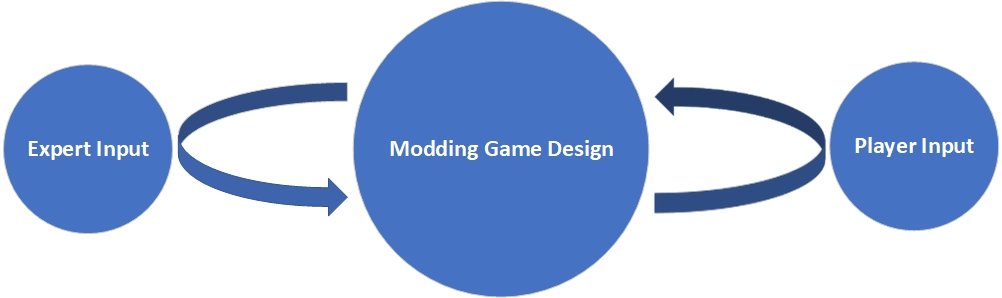
In the next phase of the project, we plan to engage in a traditional player-centered game design approach (Salen et al., 2004) and draw upon players (external to Chinese culture) to provide feedback. In a traditional player-centered game design approach, iterative feedback on player experiences help shape and inform the game with stakeholders having considerable influence on the game design. Involving players who are external to the culture and to the mod development will help the game/mod designers understand the state of the game, improvements required and whether the mod is effective at teaching martial arts and communicating cultural perspectives. Thus, our mod design has a two-pronged approach, first drawing on practitioner-experts to inform and shape the specific cultural elements embedded in the game mod, and second, drawing on players, external to the culture, to help inform gameplay and ascertain if the martial arts and lyrical message of the song were communicated effectively through the mod. Figure 4 depicts the dual expert and player feedback loops to be involved in the development of the Good Bag modding project.
Figure 4: Dual Expert and Player Input Process for Modding
The project will continue to build on the current mod and findings in future papers. The researchers are particularly interested in exploring whether players can learn Wushu martial arts moves from engagement with the mod. We are also interested in exploring the attitudes of Good Bag Beat Saber players, especially in regards to the mod’s message in relation to culture, history, racism, and current events.
Conclusion
In conclusion, given our project had a central focus on Chinese culture, we chose to engage individuals from the Chinese community to lead and strongly shape the project outcome. The Good Bag cultural approach differed from other game design projects such as Torres Strait Virtual Reality project which drew from both cultural experts and wider cultural community (Loban, 2021b). Instead, the Good Bag project specifically concentrated on the guidance of a couple of highly specialized cultural practitioners from the community who had the specific and deep cultural knowledge required for the project. Involvement of key cultural experts in the project provided an opportunity to introduce deep expertise into a highly digital and future driven space where they are typically not represented. The Good Bag project also differed from other game design projects as it was a mod design project working within the framework of an existing game. The project team did not encounter strong ideological barriers to modding the game, but instead found there were significant technical limitations. These technical limitations meant only certain martial arts moves could be represented and the original move set had to be further abstracted in Beat Saber. This abstraction showed a disparity between the organic flow of real-life martial arts moves and the strict information and game structures of Beat Saber. Our project plans to build on the expert guidance and introduce player feedback in the next iteration of the project. Our planned dual expert and player design approach to modding will help us later determine the effectiveness of the Good Bag mod to teach Chinese martial arts, and its potential to influence attitudes about contemporary and historical race-relations.
Acknowledgment
We would like to extend our deep thanks to Grandmaster Chongwei Zhang of TK Martial Arts Academy for generously contributing his time and skill to help create the mod and serve as an expert on the project. We are very grateful to Atomic Logic’s Geir S. Brillian and Jules Swain for the wonderful music mix. We are indebted to Macquarie University for generously loaning their VR equipment for the project.
Author biographies
Yunyu is an award winning multi-instrumental composer who has a background in multiple musical genres and is a graduate of the prestigious AFTRS graduate diploma screen composing course. She is the winner of the Crystal Pine award for best score from the International Samobor Film Music and Sound Festival (Short film, Drover’s Boy). Born and raised in Singapore, she started as a successful singer-songwriter who has won Triple J’s Unearthed, Yunyu has since collaborated across other creative mediums writing songs for major book publishing companies Random House and Harper Collins for award winning authors Marianne De Pierres and Kylie Chan. Previous works have been distributed by Madman Entertainment. Yunyu has since moved onto film and games composing as well as installations for AR and VR (Augmented Reality and Virtual Reality). She combines her cultural sensitivities as well as her musical sensibilities in her work, Notable works include AR musical installation with University of Western Sydney and Mod Productions as cultural advisor and composer. She is also working with David Elfick (Rabbit Proof Fence) as composer/writer/cultural advisor on a children’s musical.
Dr. Rhett Loban is a Lecturer at the Macquarie University in Sydney, Australia. Rhett received his PhD in 2020 from the University of New South Wales in Sydney, Australia. He is interested in research relating to game-based learning, virtual reality and culture.
Dr. Parrila is a Professor at the School of Education at Macquarie University. His research focuses on psychological, linguistic, and social correlates of both typical and atypical development of academic skills. He also has a keen interest in reading instruction and interventions, reading development and difficulties in different orthographies, and compensation of learning difficulties in both children and adults. Dr. Parrila received his Ph.D. in 1996 from University of Alberta, Canada. He has since worked as a Postdoctoral Research Fellow at Queen’s University, Canada, as an Associate Professor of Educational and Cognitive Psychology at the University of Tromsø, Norway, and as a Professor of Special Education at University of Alberta, Canada. He is a docent in Applied Cognitive Psychology in Department of Psychology at the University of Jyväskylä, Finland, and former the Editor-in-Chief of Scientific Studies of Reading journal.
References
Apperley, T. (2013). Modding the Historians’ Code: Historical verisimilitude and the counterfactual imagination. Playing with the Past: Digital Games and the Simulation of History, 185.
Apperley, T. (2018). Counterfactual communities: Strategy games, paratexts and the player’s experience of history. Open Library of Humanities, 4(1).
Apple Inc. (2020). Logic Pro X.
Barbot, O. (2020). George Floyd and our collective moral injury. In: American Public Health Association.
Beat Games. (2018). Beat Saber.
Becker, D. A., & Pentland, A. (1996). Using a virtual environment to teach cancer patients T’ai Chi, relaxation, and self-imagery. Paper presented at the International Conference on Automatic Face and Gesture Recognition.
Bogost, I. (2007). Persuasive games: The expressive power of videogames. MIT Press.
Brayboy, B. M. J. (2005). Toward a tribal critical race theory in education. The Urban Review, 37(5), 425–446.
Chye, C., & Nakajima, T. (2012). Game based approach to learn martial arts for beginners. Paper presented at the 2012 IEEE International Conference on Embedded and Real-Time Computing Systems and Applications.
Chye, C., Sakamoto, M., & Nakajima, T. (2014). An exergame for encouraging martial arts. Paper presented at the International Conference on Human-Computer Interaction.
CK2:AGOT Development Team. (2012). Crusader Kings 2: A Game of Thrones (CK2:AGOT). Retrieved from https://www.moddb.com/mods/crusader-kings-2-a-game-of-thrones-ck2agot
Dreyer, B. P., Trent, M., Anderson, A. T., Askew, G. L., Boyd, R., Coker, T. R., … , Mendoza, F. (2020). The death of George Floyd: bending the arc of history toward justice for generations of children. Pediatrics, 146(3).
El-Nasr, M. S., & Smith, B. K. (2006). Learning through game modding. Computers in Entertainment (CIE), 4(1), 7.
Ermi, L., & Mäyrä, F. (2005). Player-centred game design: Experiences in using scenario study to inform mobile game design. Game Studies, 5(1), 1–10.
Ford, D. (2016). “eXplore, eXpand, eXploit, eXterminate”: Affective writing of postcolonial history and education in Civilization V. Game Studies, 16(2).
Fricke, S. N. (2019). Introduction: Indigenous Futurisms in the hyperpresent now. World Art, 9(2), 107–121.
Gee, J. (2008a). Learning and games. The ecology of games: Connecting youth, games, and learning, 3, 21–40.
Gee, J. (2008b). Video games and embodiment. Games and Culture, 3(3-4), 253–263. doi:10.1177/1555412008317309
Granqvist, A., Takala, T., Takatalo, J., & Hämäläinen, P. (2018). Exaggeration of Avatar Flexibility in Virtual Reality. Paper presented at the Proceedings of the 2018 Annual Symposium on Computer-Human Interaction in Play.
Hämäläinen, P., Ilmonen, T., Höysniemi, J., Lindholm, M., & Nykänen, A. (2005). Martial arts in artificial reality. Paper presented at the Proceedings of the SIGCHI conference on Human factors in computing systems.
Heinz, E. A., Kunze, K. S., Gruber, M., Bannach, D., & Lukowicz, P. (2006). Using wearable sensors for real-time recognition tasks in games of martial arts-an initial experiment. Paper presented at the 2006 IEEE Symposium on Computational Intelligence and Games.
Ho, J. (2021). Anti-Asian racism, Black Lives Matter, and COVID-19. Paper presented at the Japan Forum.
LaPensée, B. A., Lewis, J. E., & Fragnito, S. (2010). Skins 1.0: a curriculum for designing games with first nations youth. Paper presented at the Proceedings of the International Academic Conference on the Future of Game Design and Technology.
LaPensée, E. (2020). SPEAR: a framework for Indigenous cultural games. ANTARES: Letras e Humanidades, 12(28), 4–22.
Loban, R., & Apperley, T. (2019). Eurocentric Values At Play: Modding The Colonial From The Indigenous Perspective. In P. Penix-Tadsen (Ed.), Video Games and the Global South. ETC Press.
Loban, R. (2021a). Modding Europa Universalis IV: An informal gaming practice transposed into a formal learning setting. E-learning and Digital Media, 20427530211022964.
Loban, R. (2021b). Torres Strait Virtual Reality: A Reflection on the Intersection between Culture, Game Design and Research. Games and Culture. doi:10.1177/15554120211020383
Meeropol, A (1939), [Strange Fruit].
Mukherjee, S. (2017). Videogames and Postcolonialism: Empire Plays Back. Springer.
Ousterhout, J. K. (1998). Scripting: Higher level programming for the 21st century. Computer, 31(3), 23–30.
O’Neill, K., & Feenstra, B. (2016). “Honestly, I Would Stick with the Books”: Young Adults’ Ideas About a Videogame as a Source of Historical Knowledge. Game Studies, 16(2).
Painter, N. I. (2010). The history of white people. WW Norton & Company.
Paradox Development Studio. (2012). Crusader Kings II: Paradox Interactive.
Paradox Development Studio. (2013). Europa Universalis IV: Paradox Interactive.
Phunsa, S., Potisarn, N., & Tirakoat, S. (2009). Edutainment—Thai Art of Self-Defense and Boxing by Motion Capture Technique. Paper presented at the 2009 International Conference on Computer Modeling and Simulation.
Salen, K., Tekinbaş, K. S., & Zimmerman, E. (2004). Rules of play: Game design fundamentals. MIT press.
Sánchez, J. L. G., Zea, N. P., & Gutiérrez, F. L. (2009). From usability to playability: Introduction to player-centred video game development process. Paper presented at the International Conference on Human Centered Design.
Scacchi, W. (2010). Computer game mods, modders, modding, and the mod scene. First Monday, 15(5).
SideQuest Ltd. (2018). SideQuest. Retrieved from https://sidequestvr.com/
Squire, K. (2011). Video Games and Learning: Teaching and Participatory Culture in the Digital Age. Technology, Education—Connections (the TEC Series): ERIC.
Sykes, J., & Federoff, M. (2006). Player-centred game design. Paper presented at the CHI’06 extended abstracts on Human factors in computing systems.
Wackerfuss, A. (2013). “This Game of Sudden Death”: Simulating air combat of the First World War. In M. W. Kapell & A. B. R. Elliott (Eds.), Playing with the Past: Digital Games and the Simulation of History. London: Bloomsbury.
Wallis, K., & Ross, M. (2021). Fourth VR: Indigenous virtual reality practice. Convergence, 27(2), 313–329.
Wu, E., & Koike, H. (2019). Futurepose-mixed reality martial arts training using real-time 3d human pose forecasting with a rgb camera. Paper presented at the 2019 IEEE Winter Conference on Applications of Computer Vision (WACV).
Yucel, I., Zupko, J., & Seif El-Nasr, M. (2006). IT education, girls and game modding. Interactive Technology and Smart Education, 3(2), 143–156.
Ziems, C., He, B., Soni, S., & Kumar, S. (2020). Racism is a virus: Anti-asian hate and counterhate in social media during the COVID-19 crisis. arXiv preprint arXiv:2005.12423.
 Journal of Games Criticism